Merlin Entertainment currently has its IPO going, with applications being accepted until 5pm on Thursday. Merlin owns all Legoland resorts, the London Eye, Madame Tussauds, Alton Towers and loads of other theme parks around the world. Up to 20% of shares will be sold off, valuing the business at £2.86bn - £3.34bn. The minimum value to apply for is £1000, so I won't be buying any before conditional trading begins next Tuesday. Actually, I'm not sure I'll buy any at all. Don't get me wrong, I love theme parks and Walt Disney theme parks have seen their share price rise 99% in the last 2 years, but Merlin is over £1bn in debt. I think they're floating on the back of Royal Mail, hoping that the new IPO enthusiasm will bring in more cash. But these are private owners, wanting as much as they can get for their shares, while Royal Mail was state owned so no-one lost out personally from selling it on the cheap (which I think we can now all accept that it was at 585 and still rising). Merlin's growth also looks good on paper, but that's also mainly because of it's rapid expansion through takeovers of other companies. So anyway, I might do a quick in and out trade within the first fortnight if the grey market looks optimistic, but there's no way I'm holding onto these shares.
Monday, 4 November 2013
Sunday, 3 November 2013
Investing in the Australian ASX
So, this holiday I was asked to do an economic snapshot and investment outlook for 4 countries in the EFA, with a view to tracking each country's main stock index via an ETF. So, here's my work for Australia:
Australian Economy & Equity Investment
|
Name
|
Australia
|
|
Population (2012)
|
22.68
million
|
|
Currency
|
Australian
Dollar (AUD)
|
|
2012 GDP
|
US
$1.57 trillion
|
|
2012 GDP Growth
|
3.4%
|
|
IMF GDP Growth Prediction for 2014
|
2.8% (2.5% predicted for 2013)
|
|
Unemployment
|
5.6% (March
2013)
|
|
Inflation
|
1.6% (March
2012) 1.3% in 2013 Q3 – up from 04.% in Q2
|
|
Budget Deficit/Surplus
|
Negative
$12.3 bn
|
|
Currency Rate
|
AUD/USD
0.95
|
|
IMF CPI Growth Prediction for 2014
|
2.5% (2.2% for 2013)
|
|
Main Sectors of Economy
|
Services
- 68% Mining (including “mining
related economy”) 19%
|
|
Main Exports
|
Unprocessed
resources
Agricultural
goods
|
|
Main Export Partners
|
China
29.5%
Japan
19.3%
South
Korea 8%
|
|
Main Imports
|
Machinery/Vehicles
Crude
Oil & petroleum products
|
|
Main Import Partners
|
China 18.2%
USA 11.6%
Japan 7.8%
|
|
Main Stock Exchange
|
ASX
|
|
Market Cap
|
(January
2013) A$1.4 trillion
|
|
Market Performance YTD
|
+14.45%
|
Australian
Exports
·
Australia is the world’s biggest producer of:
Bauxite/Aluminium, Opal;
2nd biggest of: Nickel, Gold, Zinc
3rd biggest of: Iron Ore, Diamonds, Natural
Gas – predicted to become the world leader of LNG production by 2020
·
Gold has gained 6% in the last fortnight with signs
that the Fed won’t taper QE anytime soon. Currently $1350/oz. Good for
Australia as it costs most of their mines $1000 approx. to produce 1 oz.
·
Australia exports predominantly unprocessed raw
materials into Asia for manufacture
·
Australia is the third largest consumer of
petroleum in the world and imports over 50% of its crude oil/petroleum and will
produce less than 20% of its needs by 2020. It also gets over 80% of its crude
imports from the Middle East via Singapore, and is the only country in the IEA
that doesn’t stockpile 90 days’ worth of crude oil. With its isolation,
continental size and reliance on transport fuels, Australia is very vulnerable
to crude oil price increases caused by instability in the Middle East.
·
Chinese
Slowdown A slowdown in the Chinese economy would have a huge effect on the
Australian economy, especially for the mining and commodity sectors. The IMF
diagram below shows that a slowdown in Chinese demand could cause Australian
GDP to decrease by over 3%. This makes the ASX particularly vulnerable as many
of the biggest companies in it are commodity/mining companies.
·
Another issue for Australia is the threat of a
gold & commodity price drop without a fall in the value of the AUD. If gold
were to trade down below $1000 oz for a sustained period as long as inflation
increases and the value of AUD falls, the real cost price of production of all
commodities falls & cushions the mining sector. The Reserve Bank of
Australia has created a strong AUD recently with high interest rates, so a drop
in commodity prices could severely affect the economy.
·
The 5 biggest companies on the ASX are: BHP Billiton (BHP) – largest mining
company in the world as of 2011; Commonwealth
Bank (CBA) – Banking; Rio Tinto
(RIO) – metals & mining; Westpac
(WBC) – Banking; Australia
and New Zealand Banking Group (ANZ) – Banking. The top 10 shows a very similar pattern of
commodity and banking companies.
·
The ASX experienced drop in 2008 along with other countries, but had
experienced less of bubble growth, so didn’t fall anywhere near as much as the
FTSE. The ASX generally has had a less pronounced boom & bust cycle.
ETFs
The
Vanguard Australian Shares Index ETF
is a physical ETF & attempts to track the ASX. Their 10 biggest holdings
are in the companies above, plus a few others such as Westfarmers, and make up
over half of the company’s holdings. High exposure to the services sector in
particular
Although
not very diverse, tracking the ASX is a relatively safe & defensive option;
the Australian economy has historically experienced higher GDP growth than the
world average and has been less volatile
than other developed countries’ – it’s commodity exports have enjoyed generally
increasing demand from developing countries so reduce the impacts of crashes in
its large financial sector. E.g. In a bad time for the financial sector, the
gold mining sector experiences high demand & vice versa.
My Outlook
In regards to Australia, I would be bullish towards an ETF
tracking the ASX. As today it has been confirmed that Syria has destroyed its
chemical weapons facilities, it seems the prospect of turbulence in the Middle
East & a following Australian oil shortage is receding. There’s been some
decline in gold and metal prices prompted by signs of general recovery and a
more positive than expected tone of the Fed’s announcement today, a possible
Chinese slowdown could also see demand for Australia’s fuel resources lessen.
Falling commodity prices will also pull down the AUD, which, in moderation,
should counteract a slowdown by increasing competitiveness of Australian
exports. As other European countries
come out of recession and the US debt ceiling situation is averted, demand for
Chinese goods and thus Australian resources will increase too. Finally, strong
growth of the ASX so far could be signal the start of a more bullish period for
stocks which bodes well for ETFs tracking the ASX.
Friday, 25 October 2013
A quick post...
UK GDP grew by 0.8% in Q2 according to data released by the Office of National Statistics today. The services industry grew by 0.7% in Q2, and manufacturing 0.8%. This is pretty good for our current situation, and fits with other recent positive economic data. Royal Mail shares are around 550p today, over £1 more than the price I paid for mine during conditional trading. Anyway, told you it would be a quick post ... and happy half term to anyone else who's got next week off like me!
Tuesday, 22 October 2013
Alibaba IPO
So this post will affect my share trading and Amazon business interests rolled into one. Alibaba's rumoured IPO. For those of you who don't know, Alibaba is a website based in China where you can order goods directly from the manufacturers. I use it sometimes when buying stock for my business. Anyway, Alibaba is supposed to triple its volume of sales and overtake Walmart as world no.1 by 2016. It's predicted that the IPO will sell shares worth $10-15 billion, valuing the whole company at about $100 billion!!!! That's a huge valuation, but it's backed up by last years growing profits of over $1 billion. Apparently, sometime after Twitter's IPO, billionaire Jack Ma, will announce that Alibaba will float on the NYSE. It's eventual performance though, will depend massively on the developed world's demand for Chinese made goods, which may be slipping. The Chinese government have increased wages significantly more than inflation gradually over the past decade, and it's predicted that by 2015 it will be actually more expensive for US manufacturers to outsource to China, when you factor in shipping etc. These wage rises could be a massive blow for Alibaba, who rely on it being cheaper for firms to buy in from abroad than to build at home. Anyway, the whole thing isn't even official yet, so maybe I'm getting ahead of myself.
Friday, 18 October 2013
Choccie chop - the price of your chocolate fix
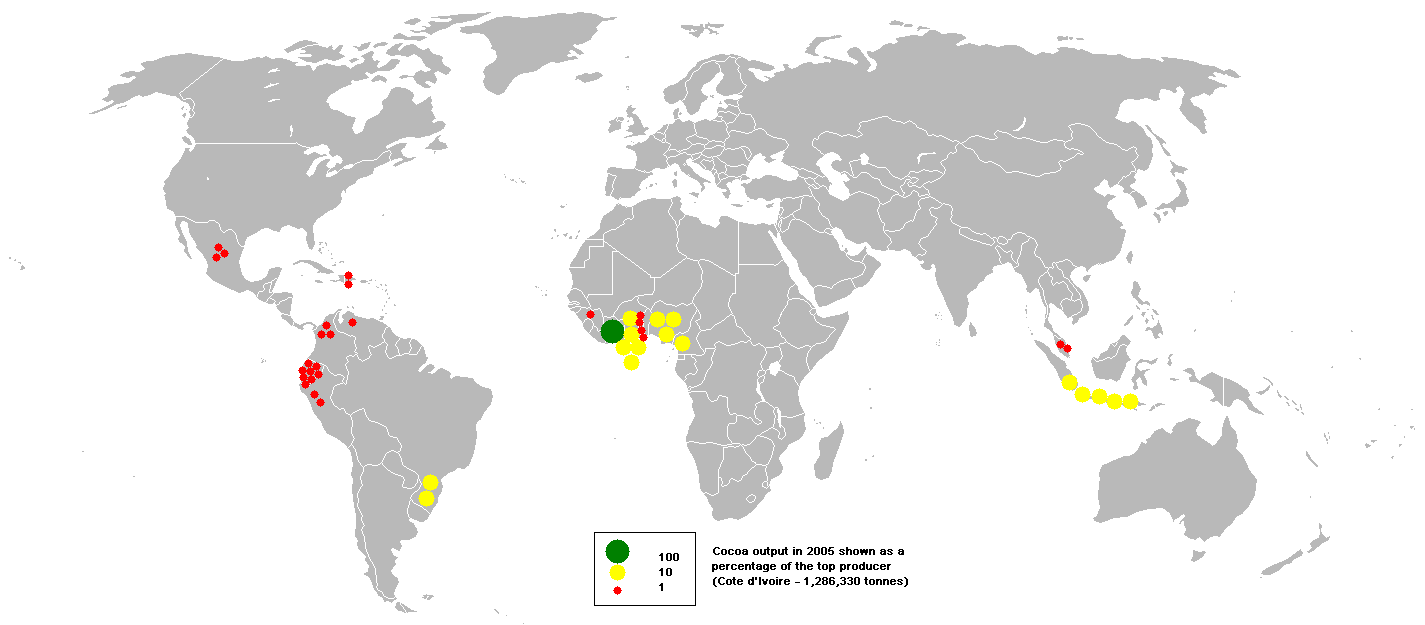
Here's an issue close to a lot of us. Chocolate. To be specific, the price of it. The cost of a 100g chocolate bar has risen 28% in the last year, even though cocoa powder and white sugar prices have dropped massively. Why? About a quarter of every bar is made from cocoa butter. Bad weather and social tensions in the Ivory Coast and Ghana, which combined produce just under half of the world's cocoa beans, points towards a bad harvest this year. On top of that rising demand from China, South America and Russia and pushing up demand. Europeans still eat the most chocolate though. The top 5 (Ireland, Germany, Belgium, Switzerland & the UK), eat on average 11.7kg of it per year (1.7 stone to us Brits, 24.7 lb to you American readers). Surprisingly, well surprising to me anyway, Americans only eat about half of that on average. Anyway, with less being invested in cocoa farms and more being demanded every year, it looks like the cost of producing a chocolate bar could increase massively in the next few years. According to CNBC, we may have a shortage on our hands within the decade.
This will have a big impact on the big producers. Here are the publicly traded top 5 companies
Mars Inc. is no.1, but apparently privately owned.
- MDLZ $15.5m sales no.2
- GRBMF $14.1m sales no.3
- NSRGF (Nestle) $12.8m sales no.4
- 2269:JP (Meiji) $12.4m sales no.5
- HSY (Hershey) $6.4m sales no.6
These companies will have to raise price and risk losing sales; keep prices the same and cut profit per bar or fill bars with cheaper ingredients like palm oil, veg fat, nuts and raisins. Doesn't sound good to me!
Wednesday, 16 October 2013
Christmas Selling in Toys and Games on Amazon.co.uk ... the deadline looms closer
If you're an Amazon seller like me, you'll definitely recognise this post's title. Since early September we've been receiving these emails warning us that if we don't sell our minimum quota (25 items for most) by the end of this month. I wrote a post about 1 month ago about using book sales to boost your numbers, but if you haven't had chance to stock up on cheap books, and it looks like you might miss the requirements, you can use a strategy that led to me developing my current book one. It's not pretty, but it will raise your sales numbers. In another earlier post I wrote about creating your own gap in the market by buying out competition. This works in the same way but is less glamorous and could actually lose you some money in the immediate short term. Sounds crazy? The way I see it is if you don't take the small hit (mine was £26 when I did this in 2011), you miss out on the 2 golden months for toy sales. About £10.13bn was spent on toys in Nov/Dec last year, more that 60% of annual toy sales. You'd be crazy to miss out on your share of that for £26. Anyway, the technique is very simple. Go to Amazon's bestselling books
page and buy however many books you need to make up your sales gap from any of the books that've been selling well for a while (at least 10 days). When they arrive, relist them straight away on Amazon, undercutting the lowest price by about 10p. Obviously the more popular the book, the quicker it'll resell. I tested this out for you guys and bought 5 copies of The Fault in Our Stars
, all of them sold within 4 hours of me relisting them. An easy way to work out the rough loss per book is to just take the postage cost as your loss value. Like I said, see this as paying for your masive Christmas profits. Anyway, hope this helps anyone who thinks they'll miss their sales minimum.
Sunday, 13 October 2013
High volatility this week ... or another financial crash.
We're only 5 days away from the US government defaulting on its debt. If that happens, everyone will have something to worry about. But let's just assume (and hope!) that the US senate will sort it out somehow, however incompetent they may seem currently. Reports say that the Republicans are slightly more willing to negotiate on reopening government than Obama, but I wouldn't worry, I'm sure Obama would prefer to lose face surrendering his "Obamacare" plans to the Republicans than be remembered as as the 1st black president ... and also the man to plunge the world back into crisis just as it was showing signs of recovering.
Whatever happens, we can expect higher volatility while more cautious investors dump more vulnerable stock and plough money into defensive shares. At the same time, optimistic investors will be trying to snap up the subsequent bargains and volume. I expect almost everything will be increasingly more volatile the closer we get to "default day" as big buyers of US debt (China, Japan etc.) will lose confidence in the states' political system, even if it is resolved, suggesting lower future investment. Retail shares in particular would suffer so look out for bargains (or chances to get out, depending how steely your nerves are), this coming week.
Subscribe to:
Posts (Atom)